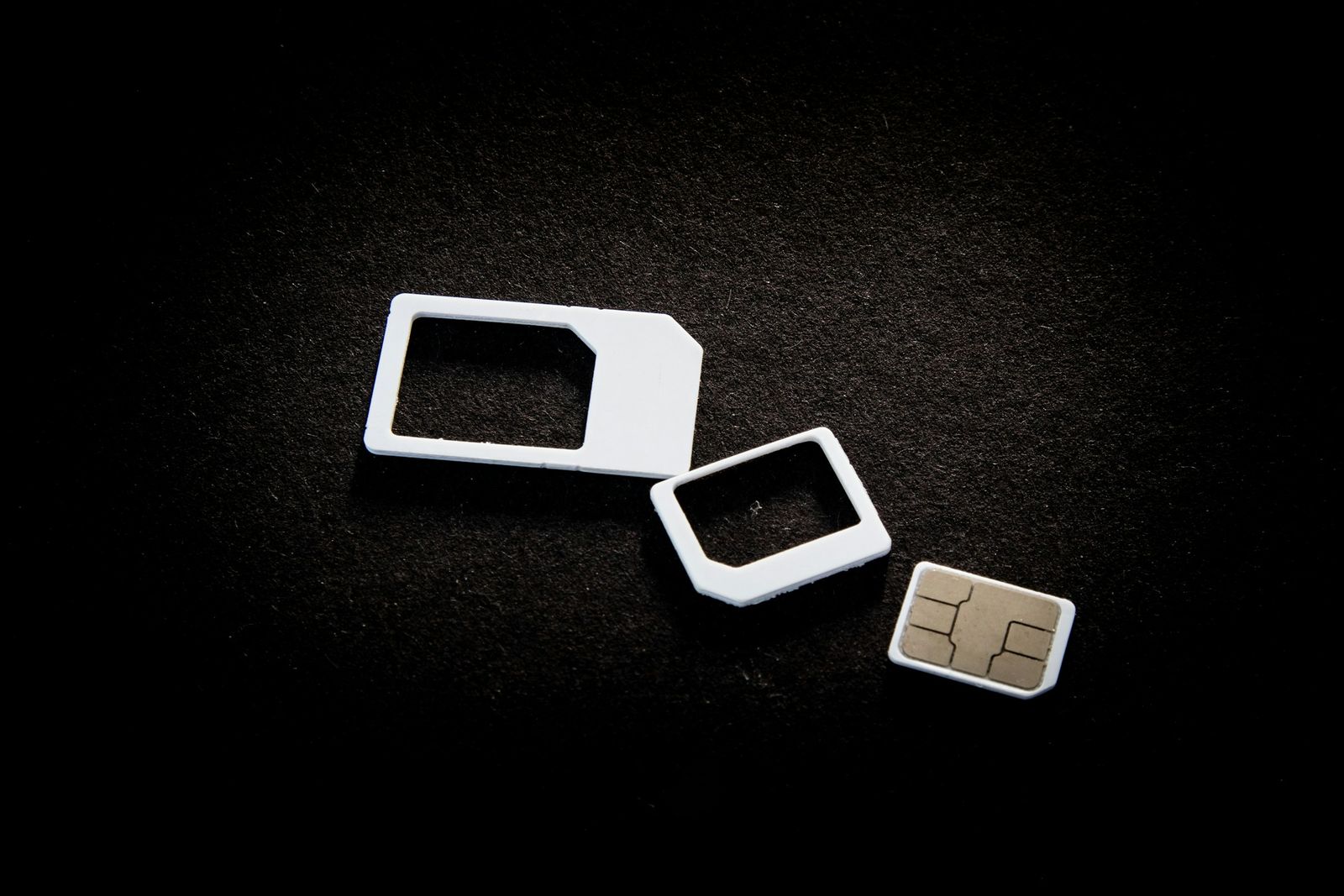
One IoT SIM for every device and every market
Most fleets end up with a drawer of different SIMs: one per country, one per network, one per device type.This is one SIM that reaches 718 networks in 203 countries on 2G, 3G, 4G, LTE-M and NB-IoT, in the form your hardware needs: a removable card, a chip soldered to the board, or software on the radio module.
Three ways into the device
The same unsteered network profiles, the same platform controls and the same data billing, whatever the hardware.
Removable SIM card
For off-the-shelf industrial gateways, edge routers and field-serviceable telematics units, in 2FF, 3FF and 4FF. No carrier steering list.
Embedded chip (MFF2)
For vehicles, smart meters and sealed enclosures exposed to vibration, heat cycles or damp. Soldered to the board, so there is no SIM tray and one less opening for water. Available with eUICC multi-profile capability.
SoftSIM
For low-power, space-constrained trackers and sensors. The SIM runs as a compact library of about 110 KB in the firmware of supported modules (Nordic nRF91, SIMCom A7672, Quectel EG21/EG25). With no SIM part on the board, you save EUR 2 to 3 per device on the bill of materials.
The SIM, built into the radio module
SoftSIM runs as a compact library of about 110 KB in the firmware of the cellular module itself. The modem sees an ordinary SIM; your board has no SIM part at all.
On the module you already chose
SoftSIM runs on supported modules: the Nordic nRF91 series for LTE-M and NB-IoT, and selected SIMCom and Quectel LTE modules. More are added over time. Tell us your module and we will confirm it before you design around it.
Nothing to buy, fit or stock
No card, no holder, no tray and no insertion step on the line. One firmware image ships to every market, so you build fewer variants of the same product.
Credentials that stay put
On supported modules the SIM credentials sit in the module's hardware key store and cannot be read back out.
Not the same as eSIM
SoftSIM is the SIM itself in software. It does not swap operator profiles over the air: if you need that, choose an MFF2 chip with eSIM. Running a physical SIM and SoftSIM side by side works only on modules that support it.
Low-power radio for devices that run on batteries
LTE-M and NB-IoT are the low-power versions of 4G built for machines. They are switched on for every SIM by default, with nothing extra to order or provision, on the networks that offer them. Today LTE-M is live on 101 networks in 33 countries, and NB-IoT on 61 networks in 23 countries, with 75 and 7 more networks validated.
Longer battery life
Both support PSM, where a device sleeps for hours or days while staying registered, and eDRX, where it checks in for messages far less often. Together they let a sealed tracker or meter run far longer on one battery than a device that stays connected. How long yours lasts depends on how often it reports, on your module and on each local network enabling these modes.
Lower cost per device
NB-IoT modules cost less than LTE-M modules, and both send small amounts of data. Data is billed per megabyte, so a device that reports a few kilobytes a day costs little to run.
LTE-M for devices that move
LTE-M hands over between towers like a phone does and has roaming in place in many countries, so it suits vehicles, trackers and anything that crosses borders. Check the countries on your routes in the coverage explorer.
NB-IoT for devices that stay put
NB-IoT reaches deep indoors and underground, into basements and meter cupboards, but it does not hand over between towers and roaming on it is rare in practice. It suits meters and fixed sensors that stay in one country.
Which low-power radio to design for
| LTE-M | NB-IoT | |
|---|---|---|
| Devices | Moving or static | Static only |
| Hand-over between towers | Yes | No |
| Roaming abroad | Available in many countries | Rare in practice |
| Indoor and underground reach | Good | Best |
| Speed (radio category maximum) | Up to 1 Mbit/s (Cat M1) | Up to 127 kbit/s down (Cat NB2) |
| SMS | Yes | Often not offered by the network |
| Module cost | Higher | Lower |
Availability is per network: the coverage explorer shows LTE-M and NB-IoT for each one. A network marked Validated has been tested and works, but is not covered by the service level agreement.
Against the SIMs most fleets start with
| Consumer phone SIM | Single-network IoT SIM | VoicePro IoT SIM | |
|---|---|---|---|
| Networks | One home network, roaming abroad | One network | 718 networks in 203 countries |
| Which network | Chosen by the operator | Fixed | The strongest in range; our team can restrict it with network lists |
| LTE-M and NB-IoT | Rarely provisioned | Depends on the network | Yes, wherever the local network offers them |
| Temperature rating | Consumer grade | Varies | Commercial -25 to +85°C, or industrial -40 to +105°C |
| Configuration | Roaming terms per country | One market only | One global APN, the same everywhere |
| Built for | People and phones | One market | Machines in many markets |
Commercial or industrial, chosen by environment
| SIM type | Size | Architecture | Commercial grade | Industrial grade |
|---|---|---|---|---|
| Removable card | 2FF, 3FF, 4FF | UICC or eUICC | -25°C to +85°C, 10-year data retention | -40°C to +105°C, 15-year data retention |
| Embedded chip (MFF2) | 5 x 6 mm, soldered | UICC or eUICC | Not offered (ships industrial) | -40°C to +105°C, 15-year data retention |
| SoftSIM | Software on the module | UICC, in software | Set by your radio module | Set by your radio module |
Choose industrial grade for vehicles, outdoor cabinets, cold chain and plant, where temperature swings and vibration would shorten the life of a commercial card.
What your engineers will ask
Which SIM for which device
| Device | Choose | Why |
|---|---|---|
| Van router, card terminal, gateway | Removable card, industrial grade | Quick to fit, rated for vehicles and outdoor kit |
| Battery asset tracker | MFF2 chip on LTE-M | Sealed and tamper-resistant, with power saving for multi-year life |
| Smart meter or fixed sensor | MFF2 chip on NB-IoT | Reaches deep indoors and draws the least power |
| A product you manufacture at volume | MFF2 with eSIM, or SoftSIM | One SKU for every market, and the operator stays your choice |
| Pilot or prototype | Removable card | Fastest to test; move to an embedded form later on the same network |
Common questions
Will these SIMs work in my existing hardware?
Yes, in any cellular router, gateway, module or tracker that supports the radio technology you need. SoftSIM needs a supported radio module.
Can the SIMs make calls?
No. They are machine SIMs for data and SMS, with no phone number and no voice service. For your team's phones, see VPX Business Mobile.
What does non-steered mean in practice?
A steered SIM is told to prefer a partner network even when a stronger one is in range. Ours carry no preferred list, so the modem picks the best network at each location. In the UK that can be any of EE, O2, Vodafone or Three.
Do I need to turn on LTE-M or NB-IoT?
No. Every SIM can use LTE-M and NB-IoT by default wherever the local network offers them. The low-power radios are part of 4G on the SIM, so switching 4G off for a SIM switches them off too.
How long will the battery last?
That depends on your device: how often it wakes and reports, how much it sends, its module, and whether the local network enables PSM and eDRX. Some networks do not allow these modes for roaming devices. We can help you check the networks on your routes before you commit to a battery size.
Does SoftSIM work with my module?
If it is on the supported list (the Nordic nRF91 series, and selected SIMCom and Quectel modules), yes. For any other module, ask us and we will check rather than guess.
What happens as 2G and 3G switch off?
The coverage explorer shows each network and technology by country, so you can design around 4G, LTE-M and NB-IoT. The SIM and the platform stay the same when a device moves to a newer radio.
More of VoicePro IoT
IoT eSIM & SGP.32
Choose the operator after the device ships, and change it over the air for the life of the device.
Fleet management
Your SIMs, their status and network logs in the VoicePro portal, with data limits, alerts, an API and webhooks.
Network diagnostics
Attach logs, signalling logs and live packet capture. Find out why a device went quiet without visiting it.
Security & private networking
IMEI lock, device isolation, IPsec and OpenVPN. Keep devices off the public internet.
Coverage explorer
Every network in 203 countries, with 2G, 3G, LTE, LTE-M and NB-IoT status by operator.
Industries
Asset tracking, logistics, telematics, metering, EV charging, payments and more, each in depth.
Get SIMs into your devices
Tell us the device, the volume and where it will run, and we will recommend the form factor and grade. Free trial: 30 days, 5 SIMs and 50 MB of data, with the management platform and email support. The trial runs on a subset of our networks; we confirm the ones on your routes.